ZwellBeing
ZwellBeing is a configurable health engagement and monitoring platform that transforms chaos into care. Designed with healthcare providers, employers, and patients all in mind, it makes connecting to resources simple and easy – streamlining the process of assessing myriad needs and connecting users to relevant medical and therapeudic services. In short, it helps to take the headache out of healthcare.
-
Born in the crucible of the COVID pandemic, Zwellbeing was originally a cloud-based application accessible from any smart device, designed to fill a critical void for healthcare providers and their patients as well as employers and their employees. It served as a tool offering the ability to navigate realities created by the virus and prevent future outbreaks.
In an atmosphere of confusion and competing narratives, it was also expanding to serve as an information resource connecting helpful programs and benefits being offered by healthcare and companies — unrelated to the pandemic— with their targeted audience. This included mental health and counseling services as well as the ability to touch base and follow up post surgery.
Meanwhile employers would be able to better promote their offerings and track the results – in a manner that respects privacy and HIPPA regulations. Healthcare providers could help a subscriber as they navigate towards care to ensure they get what they needed.
-
After initial success with local medical centers and employers grappling with effective COVID policies, ZwellBeing (or "SneeZ," as it was known at the time), sought to establish a brand narrative and architecture that could expand beyond COVID in order to incorporate new categories of need. Beyond primary care, this included areas like mental health, post-op recovery, and clinical research. They needed a flexible framework that could accommodate this expansion.
The company's directors also acknowledged that the original name, "SneeZ," was limiting and too closely associated with COVID or other such illnesses. In order to effectively expand into other categories, the brand needed a more inclusive name.
Once a new name and brand architecture was determined, it would be implemented across multiple touchpoints, including websites, application UI, trade show display concepts, and other promotional materials.
-
The Design Office of John Murph would begin with developing concepts for a new name. The original moniker, "SneeZ," included a design that accented the "Z" in associated materials, so a focus was made on solutions that leveraged this brand equity. The final strategy needed to provide a thematic vehicle capable of uniting an assortment of seemingly unrelated categories under one cohesive nomenclature (beyond being healthcare-related).
Once established, the common banner would balance consistency with flexibility. Design solutions would allow for differentiation amongst the various categories that SneeZ would be expanding into while maintaining a common, familial look and feel.
-
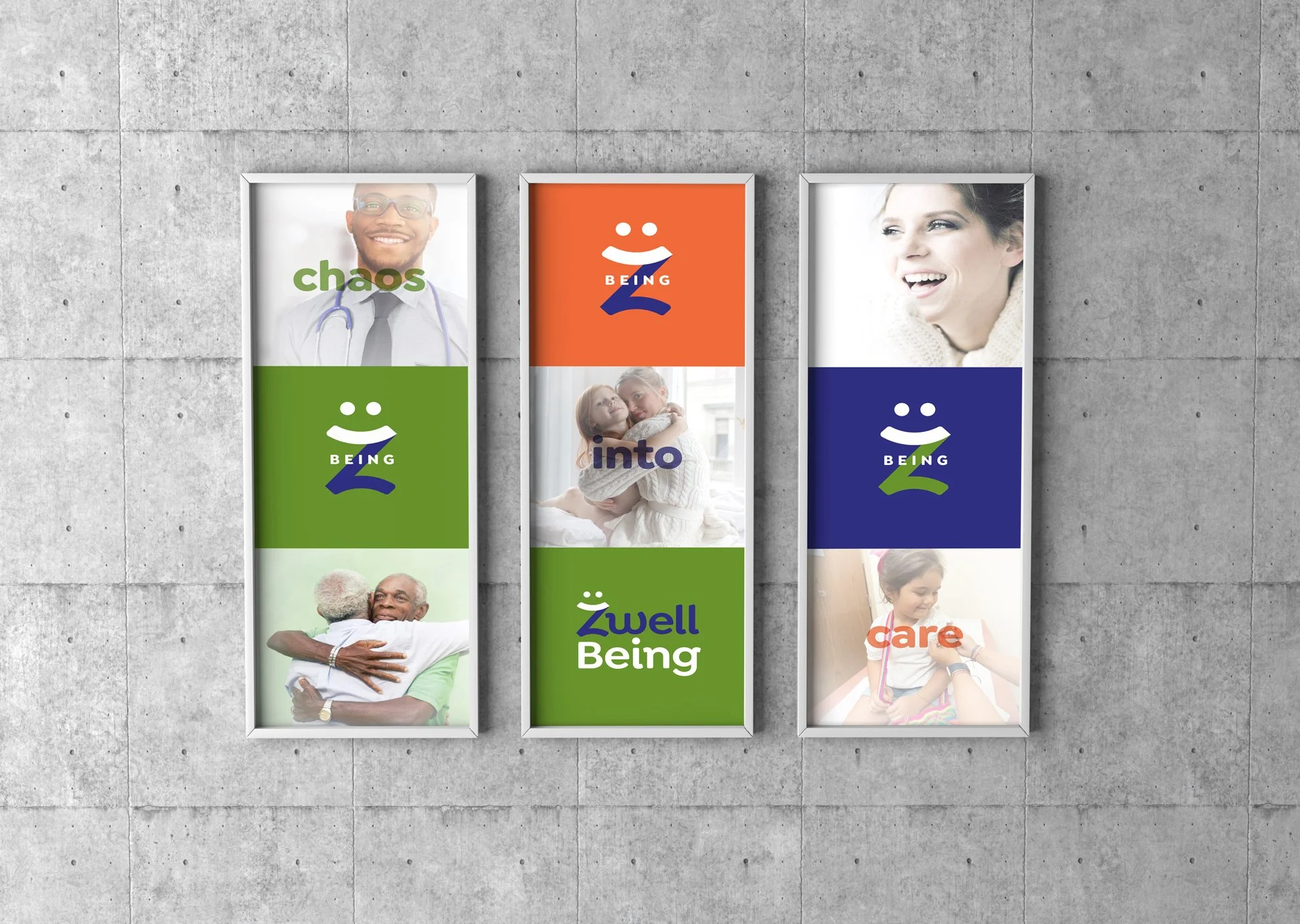
As a natural direction leveraging the “Z” associations with the original SneeZ brand equity, the final solution sets up a hybrid word concept: "ZwellBeing." By combining “Z” with “Wellbeing,” a memorable, unique (copyrightable) structure carries the brand forward. Beyond naming, this structure also provides possibilities for future idiom-based headlines and handles to promote the brand. The new name was coupled with an alliterative tagline clarifying the brand's core mission statement: "Transforming Chaos into Care." Due to the platform's core survey function that solicited the user's state of mind and wellness, the core identity was built around iconic representations of emotion. The principle "smiley face" formed the basis of a monogrammatic logo, and a diversified color story provided the foundation of a system that could expand. The smile was further echoed into the overall brand language, manifesting as an upward arc distinguishing key information sets.
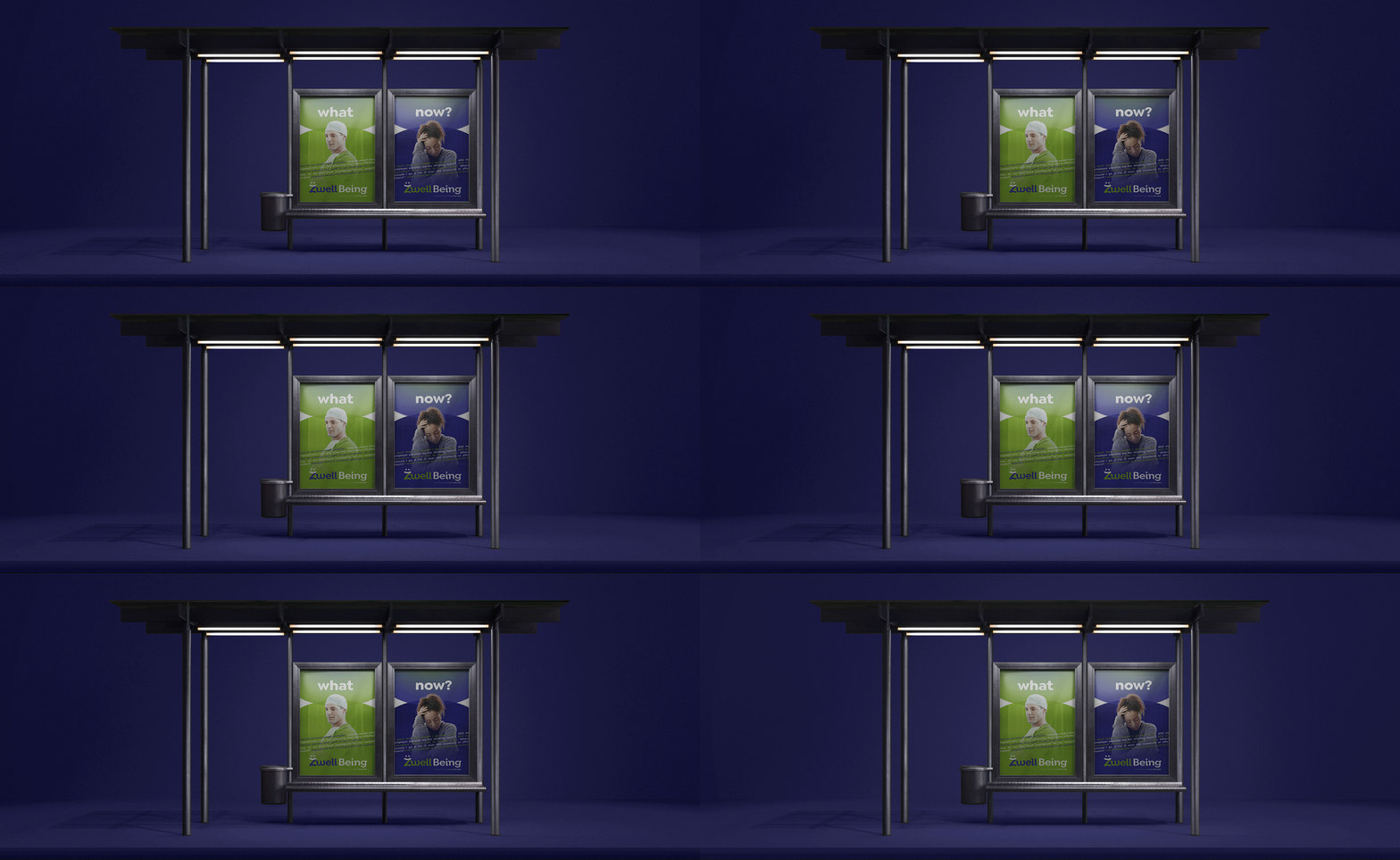
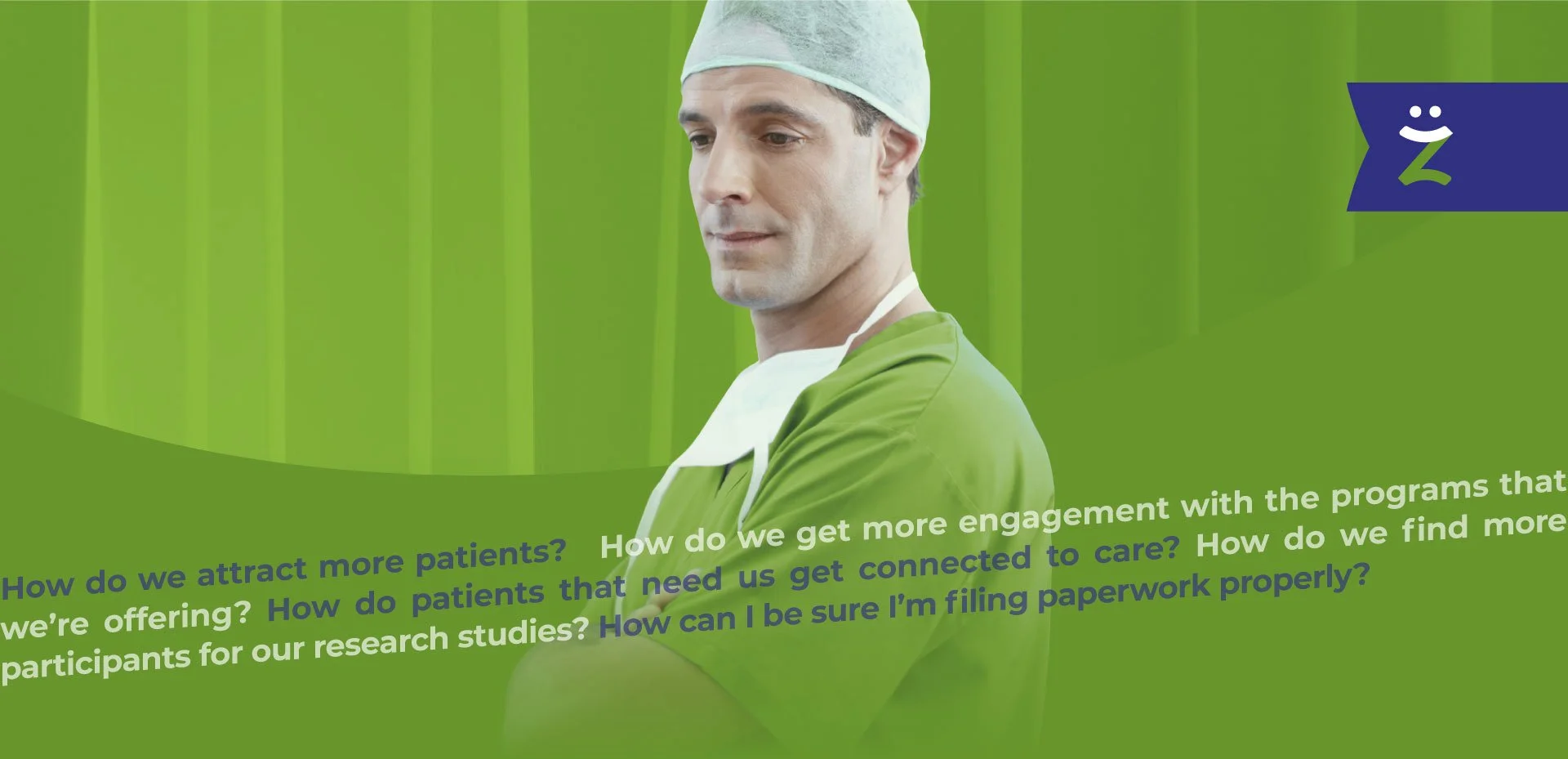
Promotional visuals personify the key parties assisted by ZwellBeing, and present them grappling with the swirling questions that the platform solves. For example, a pensive doctor wonders how to engage more patients in the programs he offers. An employee wonders if she'll be penalized for taking a sick day. An employer or manager wrestles with how to prevent abuse of his healthcare policies. In each case, ZwellBeing provides the path to clarity.
-
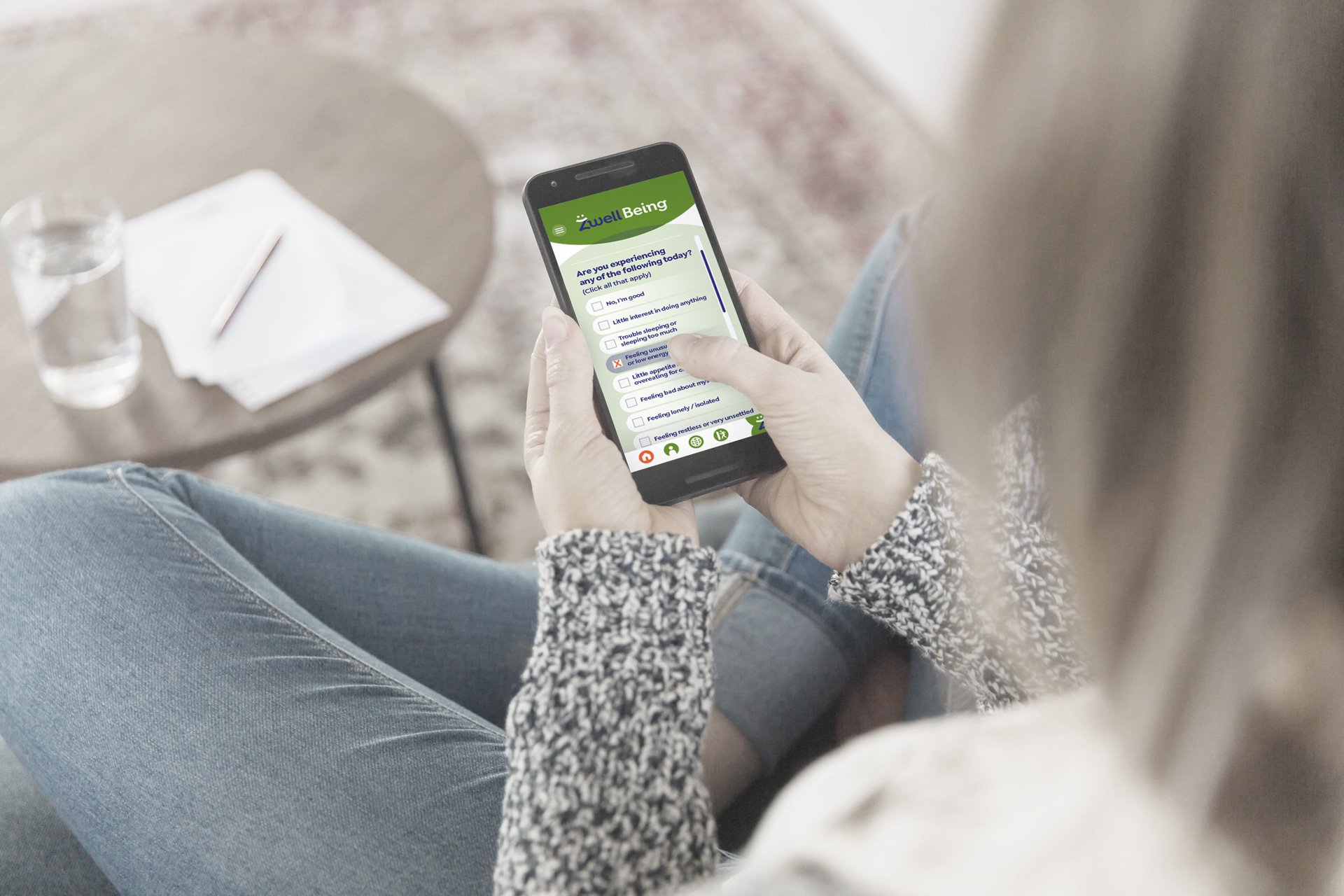
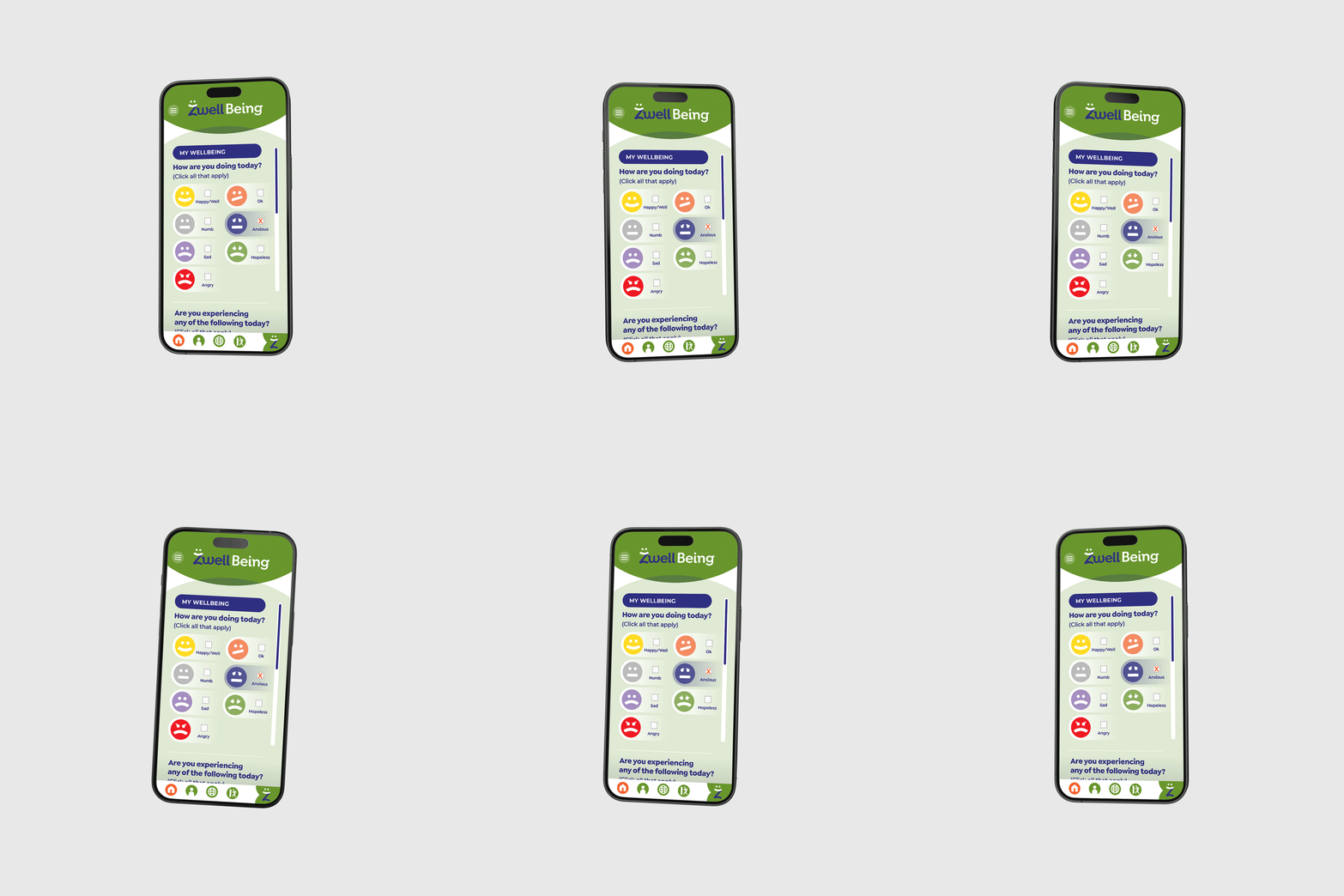
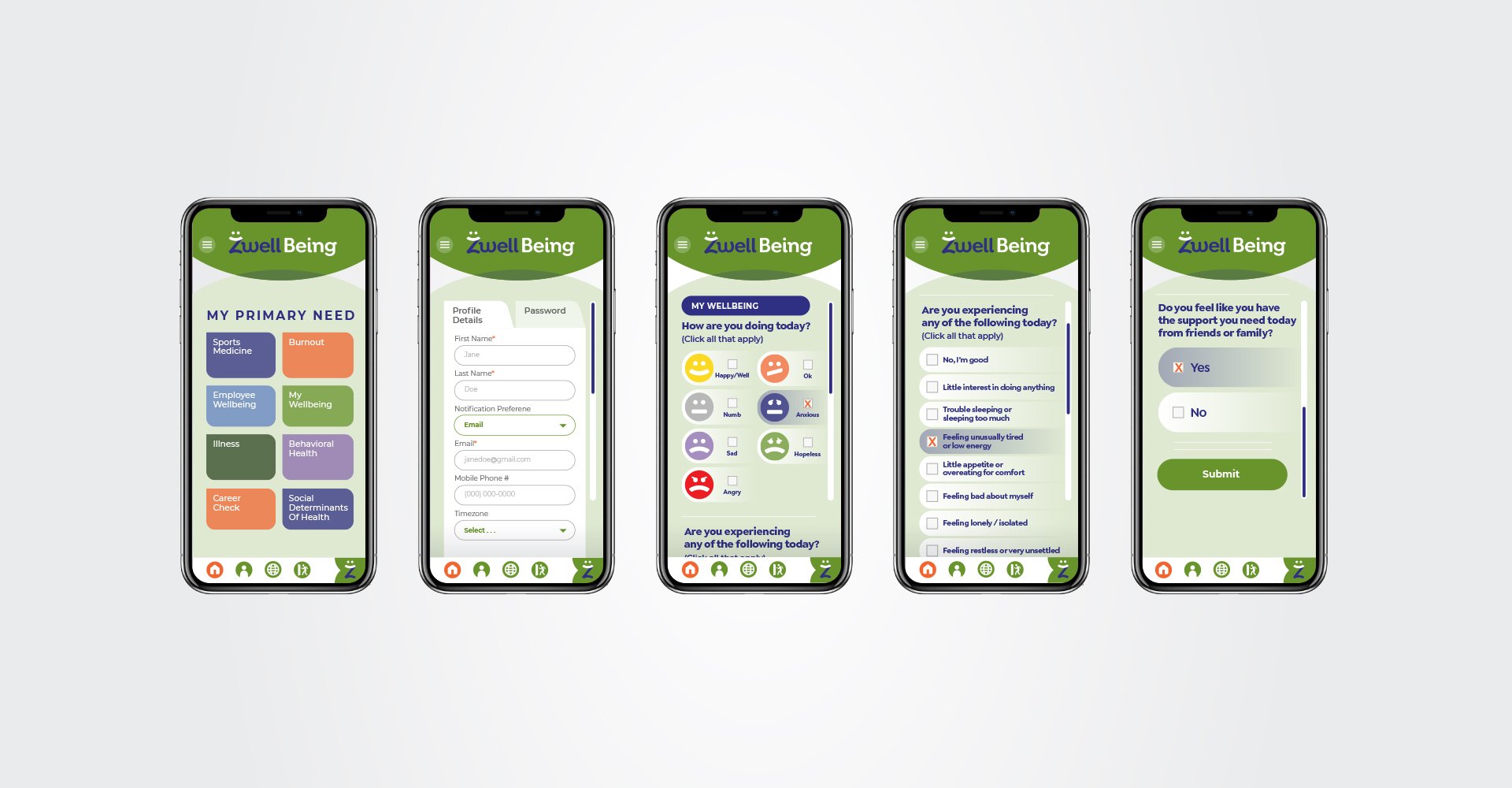
As part of the myriad touchpoints that the Design Office of John Murph developed, a smartphone app UI structure was designed as the primary interface for all users. In particular, it served as a branded conduit through which employees or patients can log their current health or state of mind, as well as access information and resources. On the back end, it also aggregated input for project managers and employers to see how their workforce is faring and how their programs are being used.
-
The final brand architecture provided by the Design Office of John Murph enabled SneeZ/ZwellBeing to expand into new categories and connect with clients and customers in a coherent, consistent way. It also clarified the brand's core position to better position it to appeal to investors and venture capitalists.
Name Concepts | Brand Strategy | Copywriting | Logo | Print | UI Design | Advertising | Website Design



ZwellBeing fills a critical void as universities, corporations, and health centers grapple with how to best serve their students, employees, and patients in ever-changing circumstances.
As an online platform accessible from any smart device, ZwellBeing helps individual users easily navigate to services they need.
Meanwhile employers can better promote their offerings and track the results – in a manner that respects privacy and HIPPA regulations. Healthcare providers can help a subscriber as they navigate towards care to ensure they get what they need.




As ZwellBeing sought to establish a brand narrative, they needed an architecture that was flexible enough to expand in order to incorporate new categories of need. Beyond primary care, this includes areas like mental health, post-op, and clinical research. The Design Office Of John Murph provided a framework that could accommodate the brand as it grows.